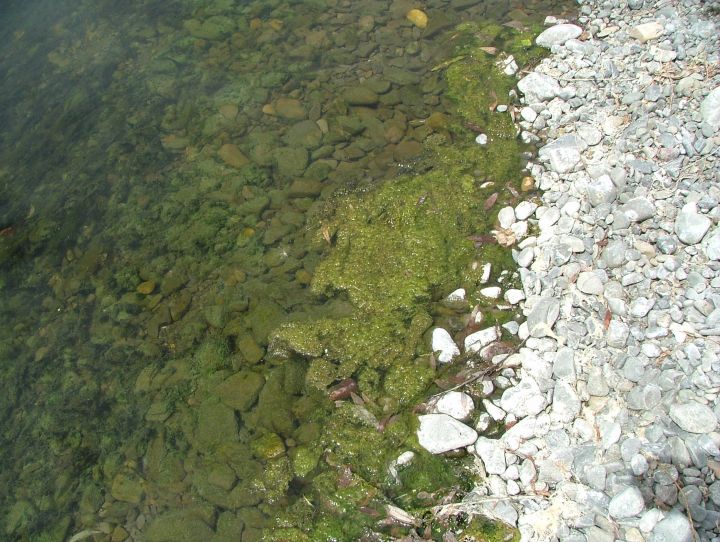
This manual prescribes a set of sampling and analysis protocols applicable to most of the common stream habitats in New Zealand. In addition to describing these methods, the manual includes an identification guide to common periphyton in New Zealand streams and rivers and a field identification chart.
The monitoring manual is a companion to our earlier publication, New Zealand Periphyton Guideline: Detecting, Monitoring and Managing Enrichment of Streams, which is available from the MfE website.
Go to the New Zealand Periphyton Guideline: Detecting, Monitoring and Managing Enrichment of Streams.
Prepared for the New Zealand Ministry for the Environment by B.J.F. Biggs and C. Kilroy (2000).
Download the Stream Periphyton Monitoring Manual
The Stream Periphyton Monitoring Manual is divided into two PDF extracts:
- Identification guide to common periphyton in New Zealand streams and rivers: Part 1 (PDF 5.6 MB)
- Identification guide to common periphyton in New Zealand streams and rivers: Part 2 (PDF 944 KB)
You can also download the entire manual as a single PDF or purchase a printed copy (see end of page).
Contents
1. Introduction
- Background
- Purpose and scope
2. Design of sampling programmes: “begin with the end in mind”
- Introduction.
- Types of sampling programmes.
- Defining your objectives.
- Issues of scale.
- Examples of setting objectives and carrying out a sampling programme.
- Reference sites.
- Maximising information for the available budget.
3. Determining data precision and number of sampling replicates required
- Background.
- Measures of variability.
- Estimating the number of replicate samples needed for general resource surveys.
- Estimating the number of replicate samples required for testing hypotheses of differences in two population means for periphyton biomonitoring and consent evaluation.
- Estimating number of replicate samples required for testing hypotheses regarding compliance with periphyton cover or biomass guidelines.
- Stratifying sampling effort to increase precision and reduce effort.
- Estimating the number of replicate samples required and level of differences in testing effects: a cautionary note.
4. Specific considerations in planning studies
- Resource surveys
- Impact assessments
- State of the Environment monitoring
- Some practical considerations before you start your study
5. Common New Zealand stream habitats and their periphyton communities
- Spring-fed streams.
- Lake-fed streams.
- Wetland-fed streams.
- Low-altitude streams.
- Hill-country-fed streams.
- Non-glacial mountain streams.
- Glacial mountain streams.
- Streams regulated by dams.
6. Field procedures
- General.
- Location of sites.
- Site records.
- Rapid assessment protocols.
- Quantitative protocols.
- Methods for sampling periphyton on artificial substrates.
- Nutrient limitation assays.
- Community metabolism (maximum primary productivity and community respiration) using benthic respirometry.
- Sample transport, storage and registration.
8. Biomass analyses
- Overview of biomass analyses.
- Sample preparation.
- Chlorophyll a.
- Equipment.
- Ash-free dry mass (AFDM).
- Biomass accrual and growth rate estimates.
9. Taxonomic analyses
- Overview of taxonomic analyses.
- Sample preparation.
- Relative abundance assessments using an inverted light microscope.
- Quantitative analysis (cell counts) using an inverted or compound microscope.
- Procedures for cleaning diatoms and making permanent mounts.
- Biovolume estimates.
- QA/QC procedure for taxonomic enumerations.
10. Data analysis and reporting
- Introduction.
- A general philosophy for data analysis.
- Some common data analysis approaches.
11. Identification guide to common periphyton in New Zealand streams and rivers
- Introduction.
- Nomenclature and classification.
- How to use this guide.
- Guide to periphyton genera: Contents.
- Glossary of terms used in taxonomic descriptions.
- Recently re-named diatom genera, with their equivalent traditional names.
- Selection of texts that may be useful in stream periphyton identifications.
- List of diatom species with authorities and selected references for identification.
12. References
Appendices
- Nonparametric methods and equivalence tests.
- Predominant periphyton community types commonly found in New Zealand streams during summer low flows and their habitats.
- Periphyton field identification chart.
Purchase a copy
A printed copy of Stream Periphyton Monitoring Manual is also available for $70 + GST and shipping (or NZ$70 + shipping for overseas orders).