
Silver carp
Hypophthalmichthys molitrix (Valenciennes, 1844)
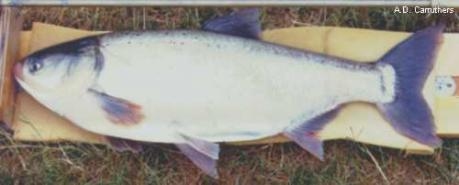
There are no self-sustaining populations of silver carp in New Zealand. Like grass carp, silver carp were brought to New Zealand specifically for their potential to control the growth of aquatic plants, in this case tiny floating plants known as phytoplankton. Field trials showed that silver carp could control planktonic blooms of bluegreen algae(cyanobacteria) at most times if enough fish were present. Cyanobacterial blooms are undesirable because they cause the water to become toxic and can cause the death of cattle and health problems for humans.
Silver carp have a distinctive bright silver colour and are unlikely to be confused with other fish species in New Zealand. They have small scales and no barbels. They feed by filtering phytoplankton from the water using specialised gill structures and their gut is greatly elongated to aid digestion of their food. Like grass carp, silver carp have very specific breeding and rearing requirements and it is unlikely that self-sustaining populations could develop in New Zealand rivers, although the risk of breeding in the Waikato River is much higher than in all other rivers. In North American rivers where they now breed and are common, they are reknowned for their jumping behaviour which creates a hazard for boaties.
Field trials with silver carp ceased in 1982. Since then brood stock have been transferred to and are maintained at a private hatchery north of Auckland. Their future in New Zealand is uncertain.
![Silver carp distribution map [2024]](/sites/default/files/styles/wide/public/2024-02/Silver%20carp.jpeg?itok=akhI0b3W)