Lowland longjaw galaxias
Galaxias cobitinis (McDowall & Waters, 2002)
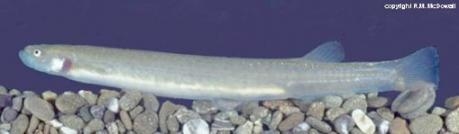
The lowland longjaw galaxias was first described from specimens caught in the Kauru River, a tributary of the Kakanui River in north Otago. Previously, these longjaw populations were thought to be disjunctive, lowland populations of Galaxias prognathus, the upland longjaw. However, DNA sequencing showed that the Kauru River fish were highly divergent from the other longjaws, and that it is a distinct species. Although its distinctly protruding lower jaw distinguishes this galaxiid from most of the others, it also has only 5 pelvic fin rays, compared to 7 for the other galaxiids, and fewer caudal rays and vertebrae compared to upland longjaws.
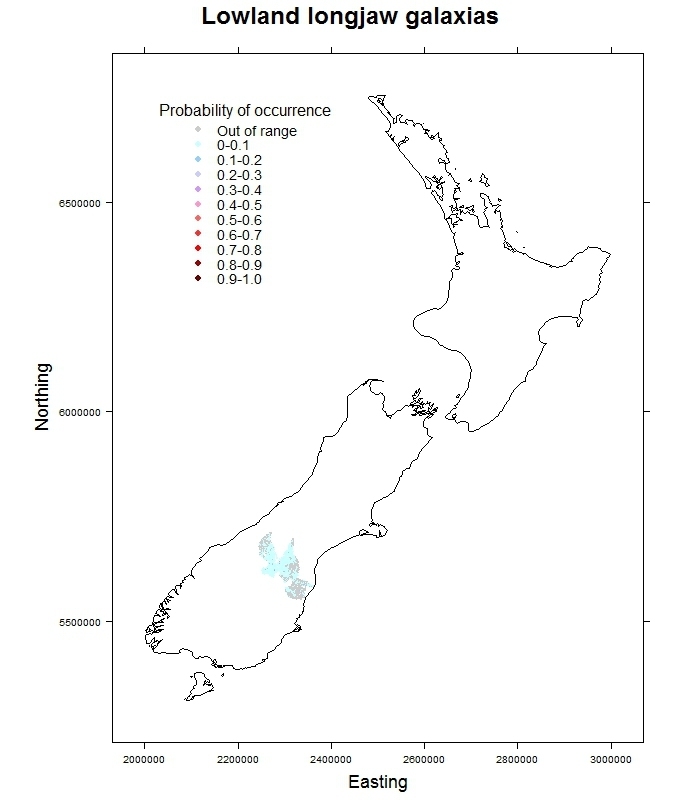
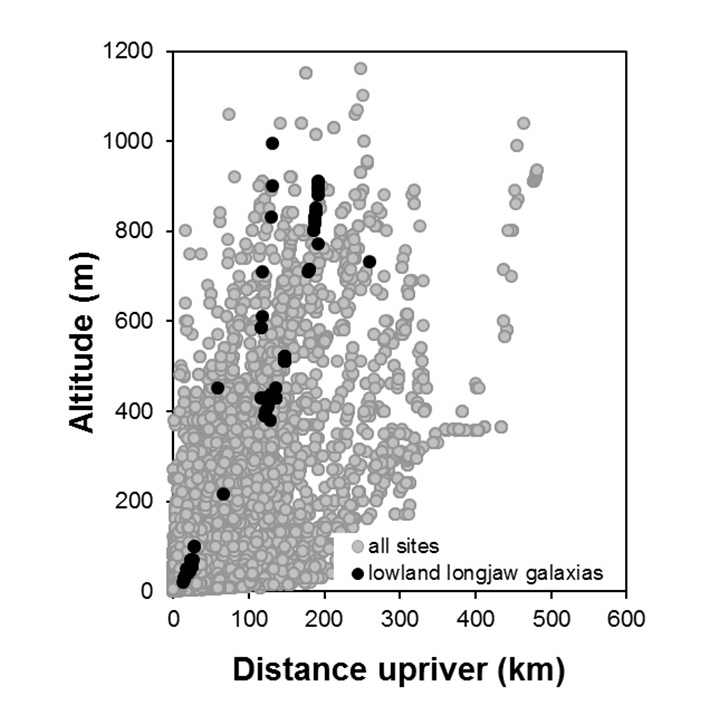
Based on its location, the new longjaw species was given the common name of lowland longjaw galaxias. This was unfortunate because recent surveys have shown that this fish also occurs in parts of the upper Waitaki catchment and so is not a lowland species. A single specimen from the Hakataramea River in 1989 was positively identified as a lowland longjaw, but no other longjaws have been found there since. How this species came to be present in such widely separated locations is a mystery, although further surveys may show that it is even more widespread.
Generally, the lowland longjaw looks similar to its upland cousin; it is a slender elongate fish lacking strong colouration. It is also quite small, rarely exceeding 70 mm in length. Adult fish occur in the margins of riffles and runs, but in daylight are usually hidden under rocks and stones. Spawning occurs in late winter and spring, and juvenile longjaws, which lack the distinctly protruding jaw that adults develop, are readily visible in backwaters and side braids from October to January.
![Lowland longjaw galaxias distribution map [2024]](/sites/default/files/styles/wide/public/2024-02/Lowland%20longjaw%20galaxias.jpeg?itok=cKbVDCCX)