Lamprey
Geotria australis (Gray, 1851)
The lamprey spends most of its life in the sea, where it uses a circular sucker to attach itself to other fish. It feeds by rasping a hole in their flesh and then, like a leech, it sucks out a meal of blood. The adults, which are over 400 mm long, spawn in fresh water, and thus migrate into rivers from the sea to spawn in small headwater streams. The adults do not feed while in fresh water and so are not parasitic on freshwater fish, although North American species in the Great Lakes do feed on salmonids.
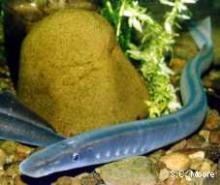
Lampreys can be distinguished from eels by the presence of the circular sucker instead of a mouth and by the seven gill openings along their sides just behind the head. Male adult lampreys also have large pouches just behind their mouths. When they first come in from the sea, lampreys are bright silvery-blue but soon change to a drab dark grey colour.
We believe juvenile lampreys spend up to four years in fresh water before migrating to the sea. At first they are a muddy brown colour and look like small eels. They appear different from eels by having seven gill openings and no eyes. At this stage, they inhabit sandy banks along the sides of streams. As they approach the size for migration to the sea, juvenile lampreys develop eyes and change to a bright silvery-blue, just like the adults. However, they are only about 100 mm long at this stage.
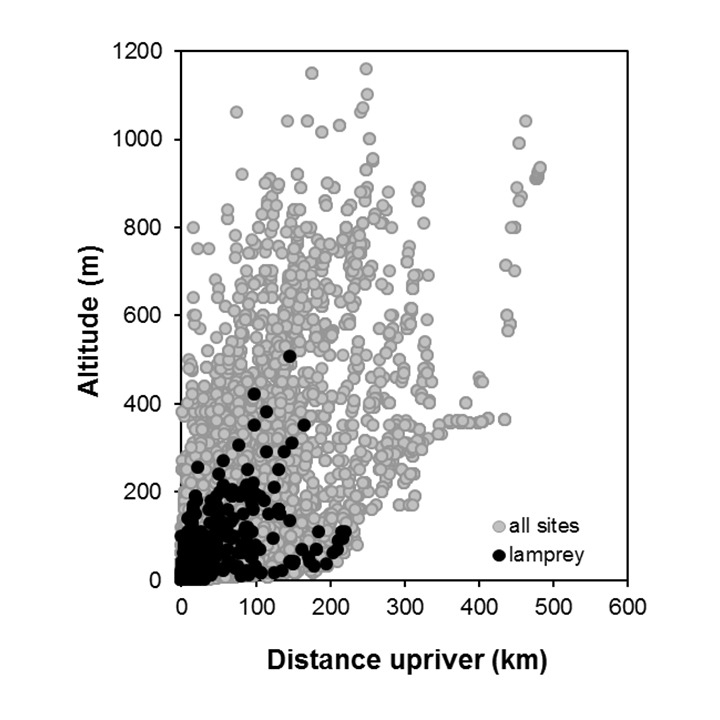
Lampreys are found throughout New Zealand, and also in Australia and South America. Despite their wide distribution, they have not been reported from Stewart or Chatham islands. Generally they occur close to the coast at low altitudes. On returning to freshwater to breed, adults can use their circular sucker to latch onto and surmount obstacles such as rapids and small falls. Little is known about their breeding habits.
Lampreys were an important food resource for Maori, and elaborate weirs were constructed to catch them. This traditional fishery still occurs on a small scale in the Wanganui River near Pipiriki.
![Lamprey distribution map [2024]](/sites/default/files/styles/wide/public/2024-02/Lamprey.jpeg?itok=2Zfc1Pfb)