Koi/amur carp | common carp
Cyprinus rubrofuscus (Lacépède, 1803)
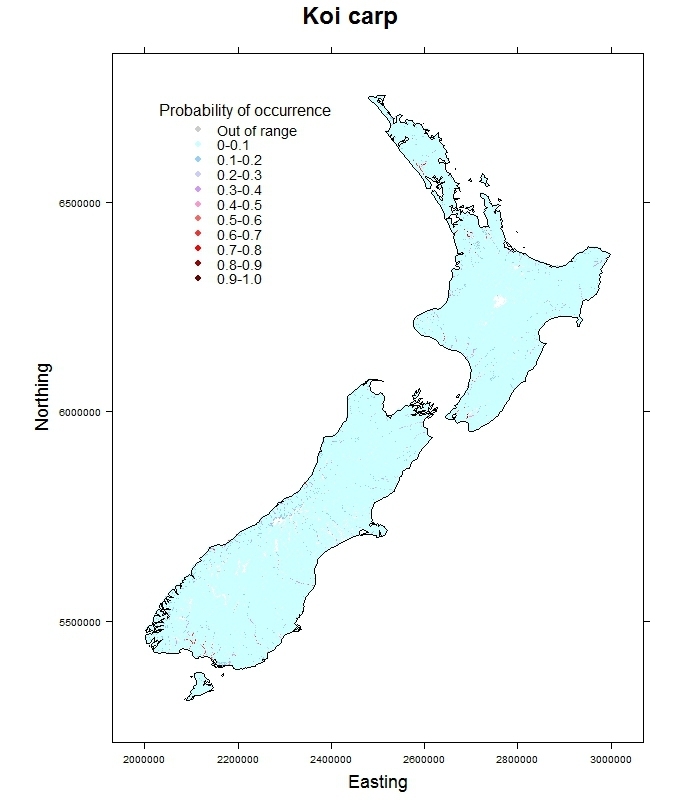
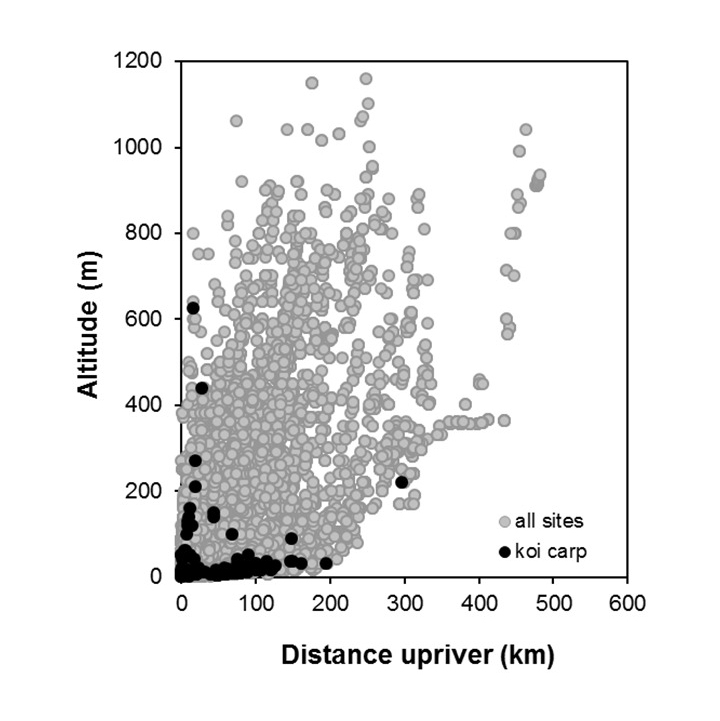
This brightly coloured member of the Cyprinidae family is a variety of the common carp. The common carp is native to Asia, although it has been introduced so widely and for so many centuries that its precise origins are uncertain. Today, it occurs on every continent except Antarctica. It is not known whether the introduction of koi/amur carp here was deliberate or accidental, but feral breeding stocks were first noticed in the Waikato in 1983. They are now common throughout the lower Waikato system, and have been spread mainly into ponds throughout the North Island. The first South Island record of koi/amur carp occurred in Nelson in 2000, but most of the South Island populations have now been successfully eradicated.
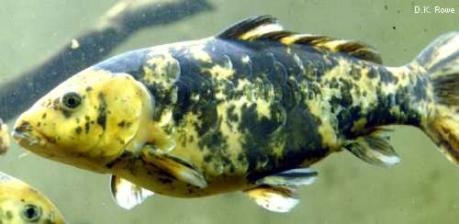
Wild common carp tend to be an olive green colour, but the New Zealand stocks are derived from the highly bred ornamental Japanese koi and thus can exhibit a calico pattern of black, red, orange, gold and white blotches. So far, our feral stocks have not reverted back to the wild colouration. Although their colour pattern is a useful distinguishing characteristic, they also have two pairs of barbels that the other Cyprinidae found here lack.
Koi/amur eat a wide variety of organisms, including both plants and animals. One way they feed is by sucking up and expelling material from the bottom, filtering out edible material as they do so. This habit means that, at high densities in shallow lakes, they can greatly increase the turbidity of the water because they are constantly disturbing the substrate. This makes waterways unattractive and reduces the abundance of aquatic plants. In other countries, common carp have caused such an increase in turbidity that vast amounts of money and effort have been spent trying to eradicate them; unfortunately these have largely been unsuccessful. Although similar problems have not yet been documented in New Zealand, the spread of this fish should certainly be minimised.
![Koi carp distribution map [2024]](/sites/default/files/styles/wide/public/2024-02/Koi%20carp.jpeg?itok=g7dNd1dd)