
Banded kokopu
Galaxias fasciatus (Gray, 1842)
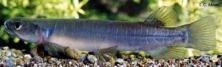
This member of the Galaxiidae family is one of the five species that occur in the whitebait runs that enter our rivers each spring. Banded kokopu are generally the smallest of the five species when they are whitebait and have an overall golden colour. The juveniles are very good climbers and will often escape from buckets by clinging to and wriggling up the sides.
Adult banded kokopu can be distinguished from the other galaxiid species by the presence of the thin, pale, vertical bands along the sides and over the back of the fish. These bands begin to develop quite early, but similar bands also appear on juvenile giant kokopu, and it is easy to confuse young fish of these species. It is probably best to send small specimens to a fish biologist for identification. Banded kokopu commonly grow to over 200 mm, and fish of this size should be no problem to identify correctly.
Adult banded kokopu usually live in the pools of very small tributaries where there is virtually a complete overhead canopy of vegetation. This vegetation does not have to be native bush, however, and banded kokopu happily live in urban streams and streams under exotic pine plantations so long as overhead shade is present. They only occur in pools where there is instream cover such as an undercut bank, large rocks or wood debris. They depend on terrestrial insects for a large proportion of their diet and can detect the small ripples made by moths and flies that become stuck on the water surface of the pool.
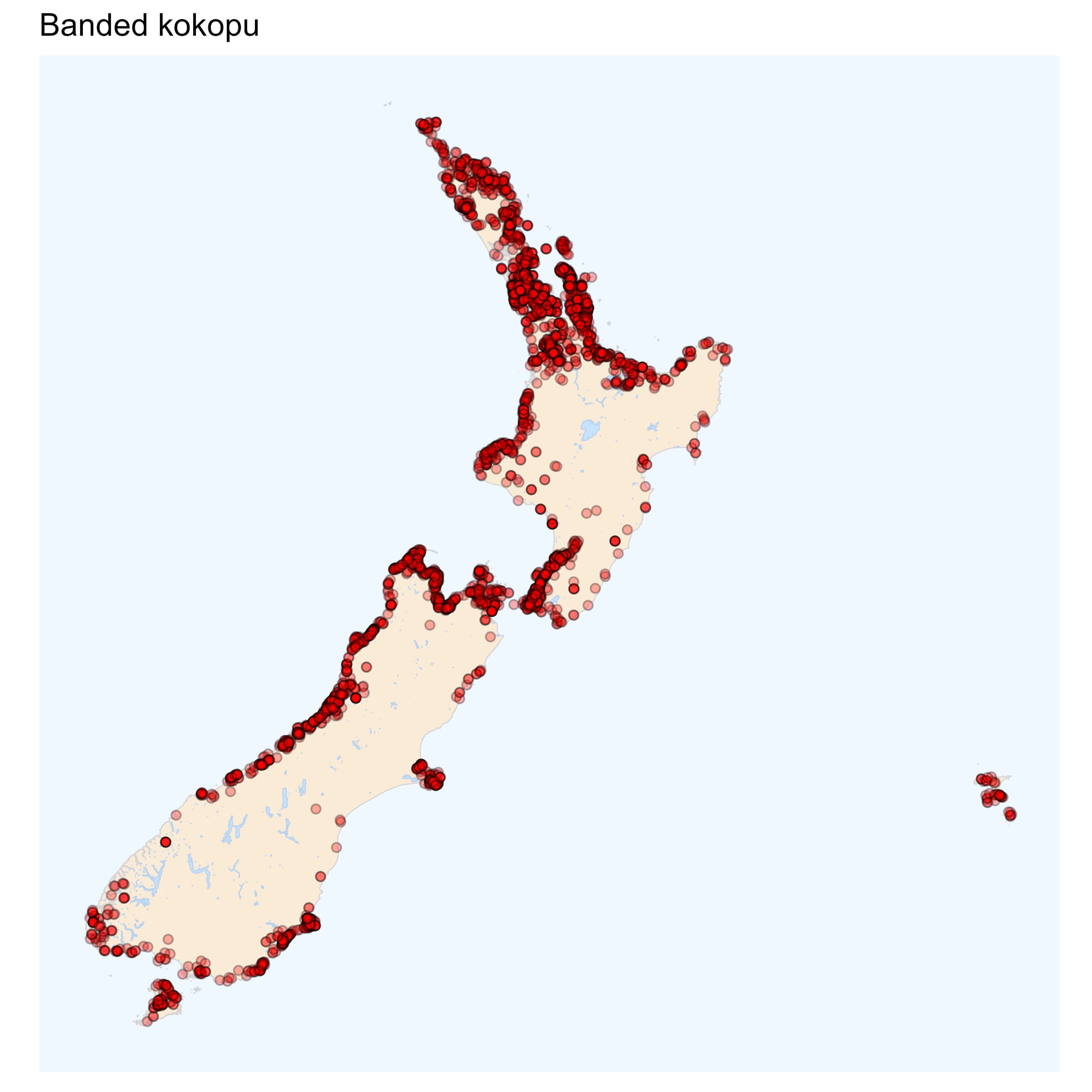
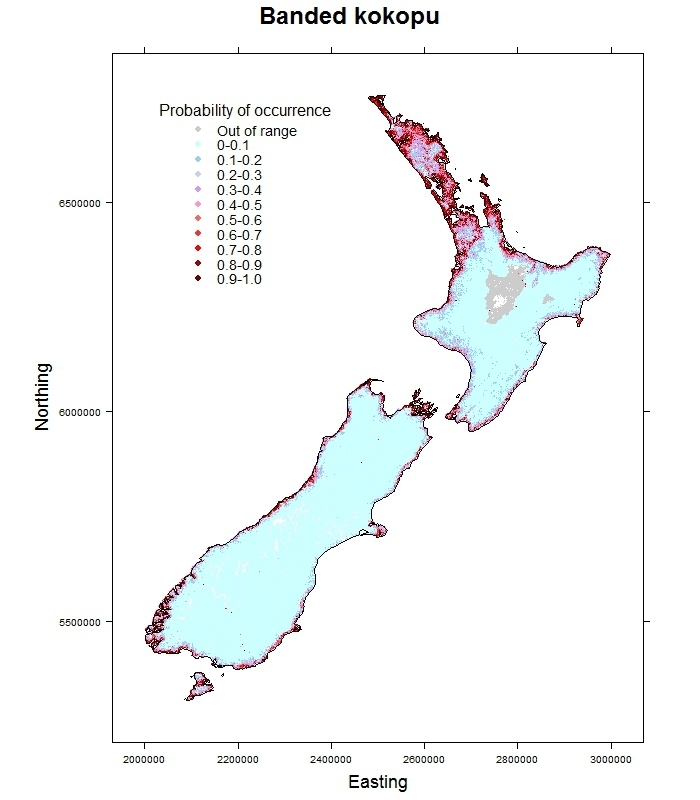
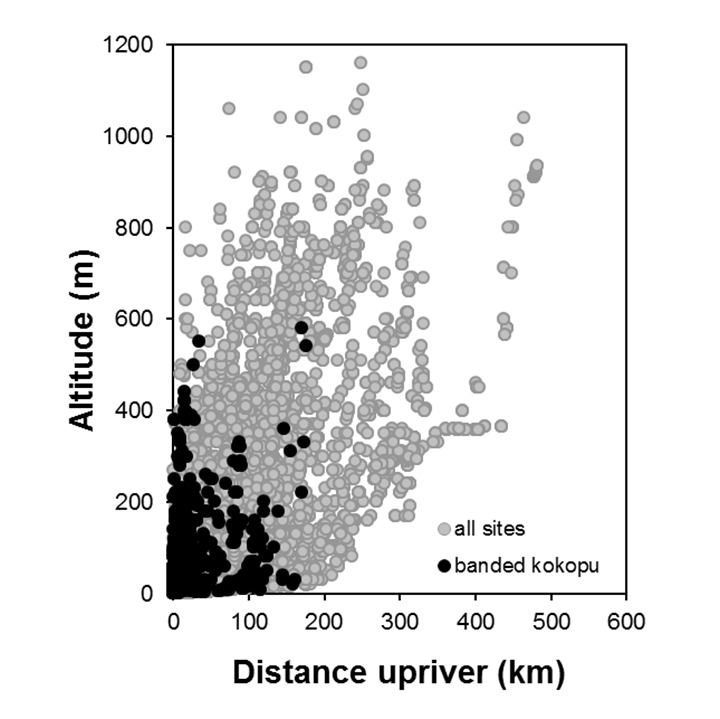
Although the juveniles are good climbers, banded kokopu do not penetrate very far inland and are primarily a coastal species. They are found on Chatham and Stewart Island, but occur only in New Zealand. Banded kokopu are rare along the east coast of the North Island south of East Cape and down the east coast of the South Island, but common elsewhere. This distribution is probably a result of intensive land development and the sensitivity of the juveniles to suspended sediments. Rivers containing glacial flour or eroding sedimentary catchments are not attractive to the whitebait of this species.
Download PDF Download