
Alpine galaxias
Galaxias paucispondylus (Stokell, 1938)
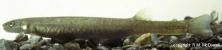
Alpine galaxias are difficult to distinguish from dwarf galaxias, but Alpine galaxias have 16 caudal and 7 pelvic fin rays compared to 15 and 6, respectively, in dwarf galaxias. There are also white chevron-shaped marks in front of the dorsal fin on alpine galaxias. Although these marks are only visible on live specimens, they can be used to distinguish alpine galaxias from Canterbury galaxias and koaro. In addition, alpine galaxias have a more slender, elongate shape than Canterbury galaxias or koaro.
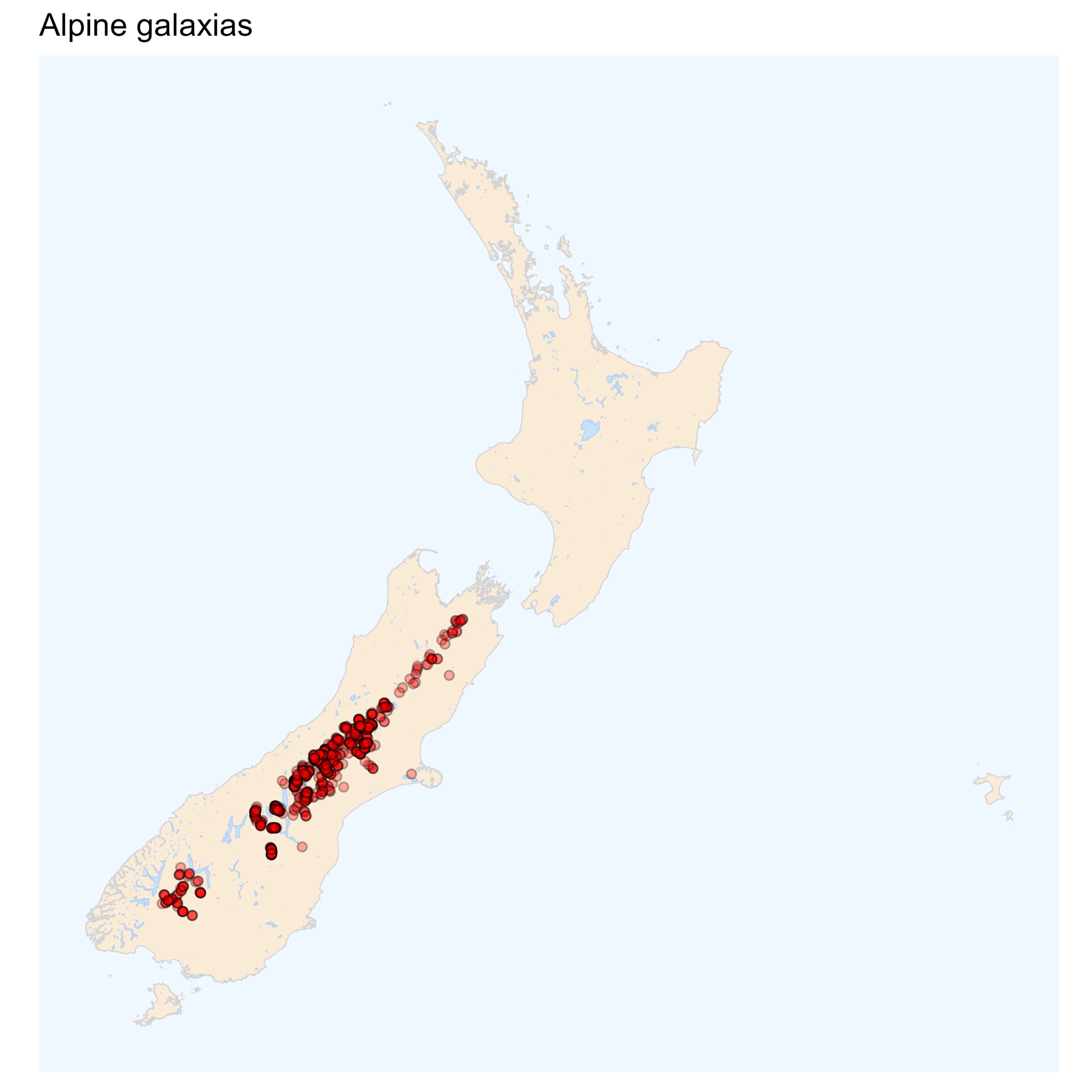
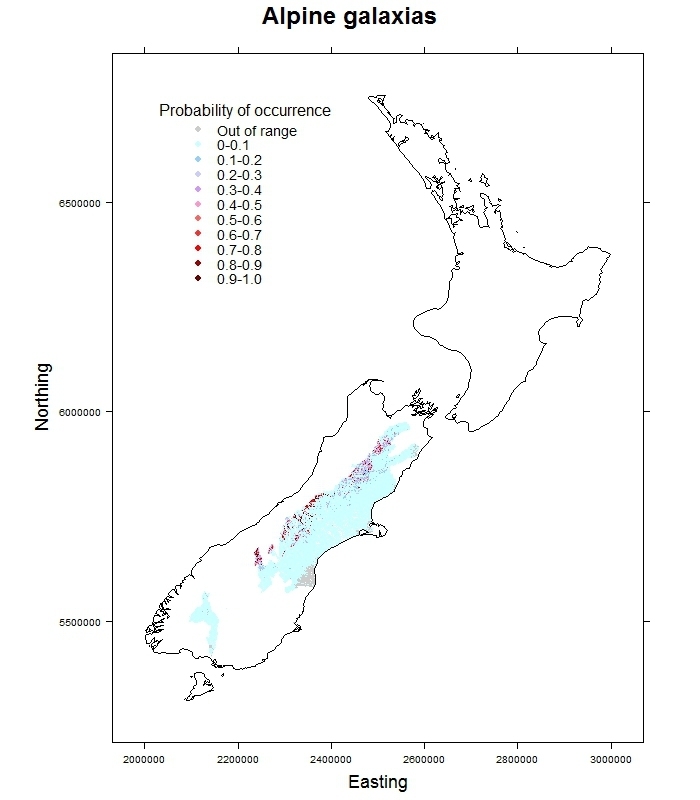
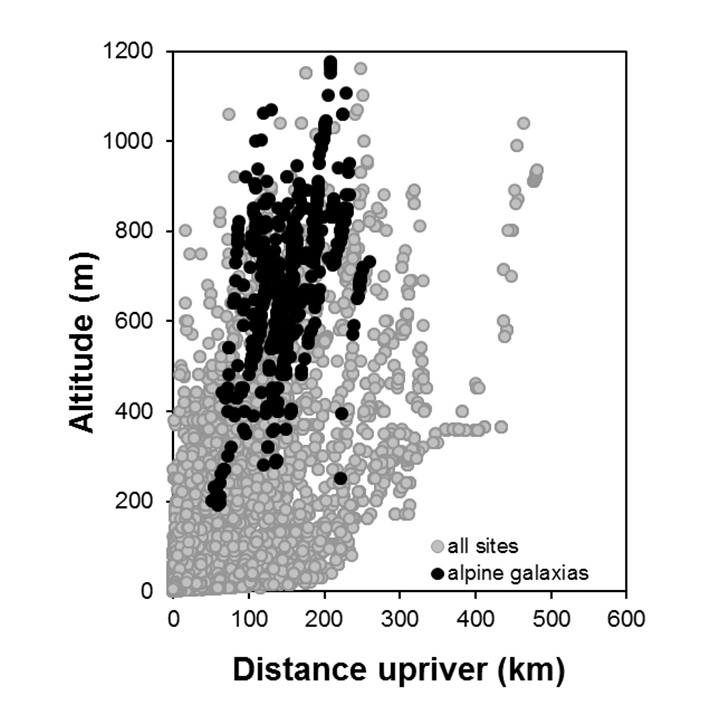
Alpine galaxias have a similar life cycle to longjaw galaxias, and they inhabit many of the same streams at mid to high altitudes draining to the east coast of the South Island. However, alpine galaxias generally live in deeper, swifter water than longjaw galaxias, and their distribution extends further south into Southland. These two species have overlapping diets, but the alpine galaxias reaches a larger maximum size (112 mm) than the longjaw galaxias (87 mm).
Download pdf of this page.