Freshwater
Adequate clean water will be one of the biggest issues facing the planet this century.
Research projects
Featured research project
Reintroducing giant kōkopu to Nukumea Stream
Date: December 04, 2009
National Centre:
The giant kōkopu is a native whitebait species considered rare and vulnerable. NIWA is working with Mahurangi Technical Institute and environmental consultancy Boffa Miskell to test the feasibility of reintroducing giant kōkopu to Nukumea Stream, north of Auckland. Read more about Reintroducing giant kōkopu to Nukumea Stream
Latest projects
Reintroducing giant kōkopu to Nukumea Stream
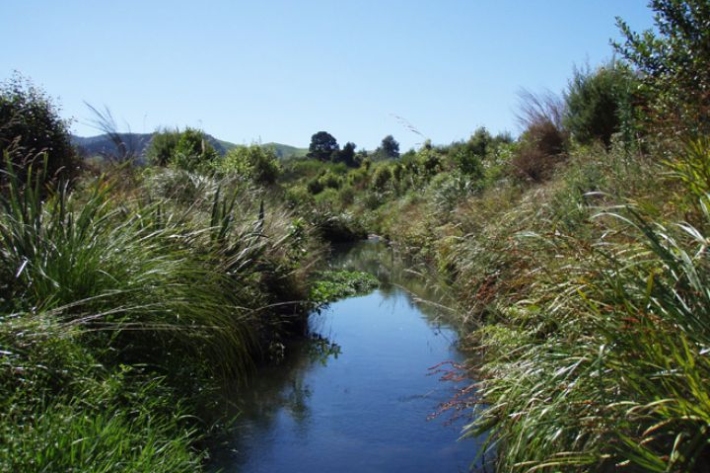
The giant kōkopu is a native whitebait species considered rare and vulnerable. NIWA is working with Mahurangi Technical Institute and environmental consultancy Boffa Miskell to test the feasibility of reintroducing giant kōkopu to Nukumea Stream, north of Auckland. Read more about Reintroducing giant kōkopu to Nukumea Stream
Bio-oil from wastewater algae
This project will demonstrate the commercial feasibility of producing bio-oil by the conversion of algae biomass that has been grown in wastewater treatment facilities. In particular we aim to maximise algae production in High Rate Algal Ponds (HRAP) by adding carbon dioxide, and demonstrate energy efficient conversion of algal biomass to bio-oil. Read more about Bio-oil from wastewater algae
The National Centre for Water Resources (NCWR) provides public information on river, lake, and groundwater conditions across New Zealand including water quantity and quality. It also acts as a distribution point for new technology and management tools for water-related issues. Examples include daily flood forecasts in collaboration with Regional Councils and Unitary Authorities, and the development of linked databases containing a wide variety of aquatic information. Scientists at the Centre are active in monitoring and researching New Zealand's freshwater systems, particularly the influences of changes in land-use and climate variability on both the physical and biological aspects of rivers, lakes, wetland and aquifers.
Our Services
Our goal is to bridge the gap between science and the community in the field of freshwater resources, by providing science, technology and resource management services to New Zealand. Read more about Our Services
Specialist Analytical Services
Algal species identification and enumeration
Read more about Specialist Analytical ServicesWater Quality Monitoring and Advice
Design and maintenance of environmental databases
Environmental impact assessment for consents
Sub contracting for industrial consent applications
Water quality monitoring - regional councils
Continuous water quality monitoring
Water mass tracing
Stormwater monitoring (Urban Aquatics)
Read more about Water Quality Monitoring and AdviceNews
These news items are related to our research. For all NIWA news see news and publications.
Publications
Water Resources Update
a quarterly magazine that informs readers about collaborative work throughout the country. Each issue of the newsletter includes an update on New Zealand’s water resources and a feature article on a river or catchment.
Sign up to the FWU.
Read more about Water Resources Update
Management Tools
Some of the useful methodologies and software we have developed. Read more about Management Tools
Riparian Management Classification
Management of stream riparian areas - including vegetation and stock access - influences the health of streams and downstream water bodies. Read more about Riparian Management Classification
Models to help manage erosion
Managing land erosion, and subsequent sedimentation in streams, lakes, and coastal areas, is a big headache for many local authorities. Read more about Models to help manage erosion
River Environment Classification
NIWA has developed a GIS-based environmental classification of New Zealand’s rivers. The development of the River Environment Classification (REC) was supported by the Ministry of the Environment (MfE) with the involvement of a number of regional councils. Read more about River Environment Classification