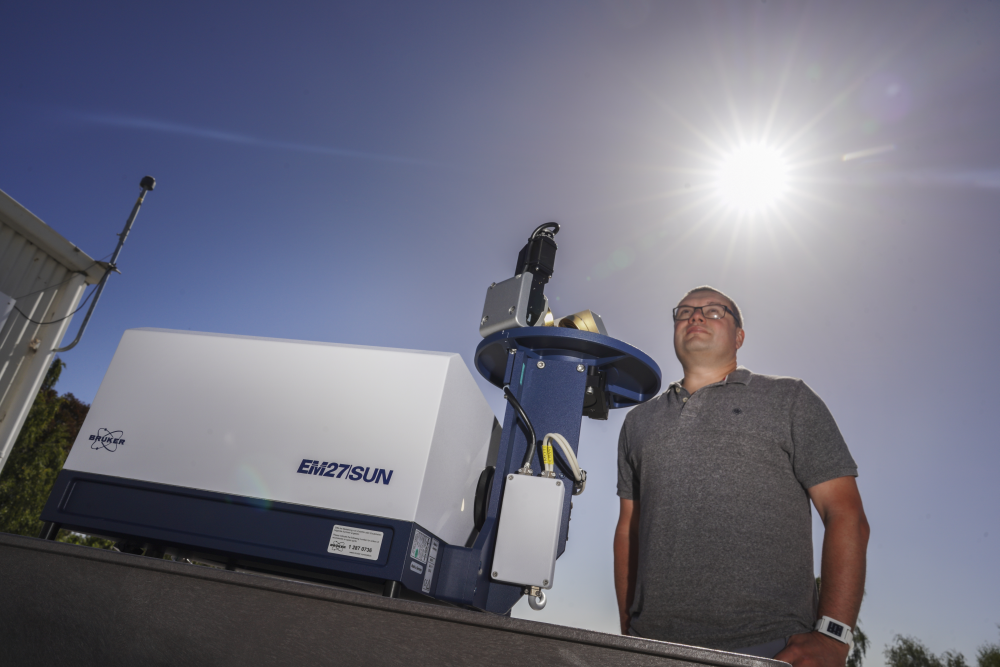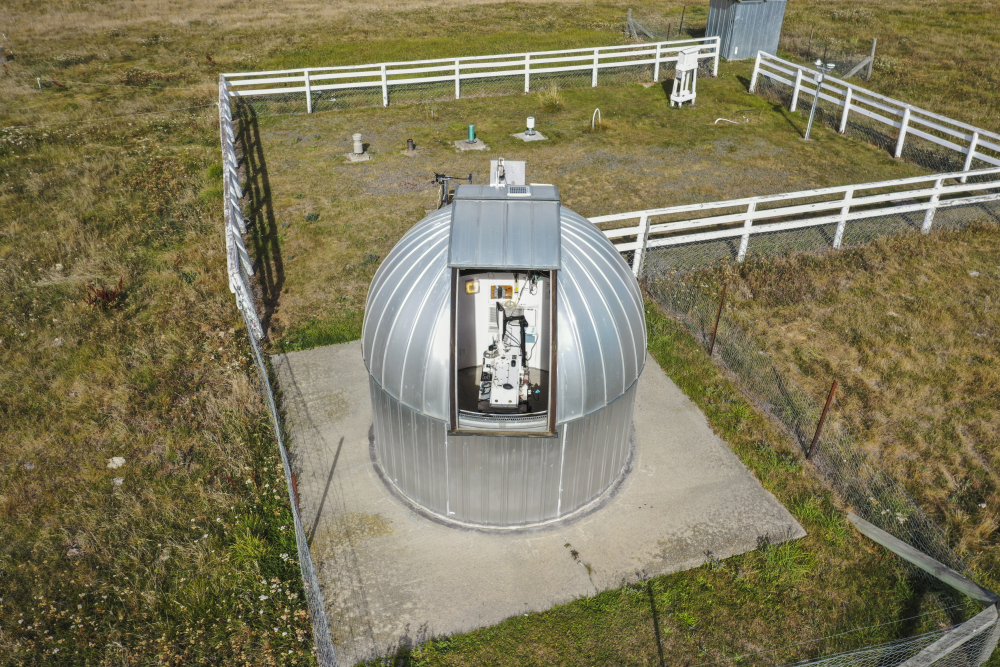
NIWA's Atmospheric Research Station at Lauder in Central Otago specialises in measuring CFCs, ozone, UV levels and greenhouse gases and has a wide range of world-class instruments and research scientists.
Introduction
NIWA's Atmospheric Research Station situated at Lauder (35 kilometres from Alexandra in New Zealand's South Island) is well known throughout the international atmospheric research community. Clear skies and geographical isolation makes it perfect for observing atmospheric chemistry and radiation. The station specialises in measuring CFCs, Ozone, UV light levels and greenhouse gases and has a wide range of world class instruments. There are approximately 9 staff working at our Lauder research centre.
Celebrating 60 years of outstanding atmospheric science
For six decades atmospheric scientists have been making measurements in the middle of nowhere, Central Otago. Now, this global scientific powerhouse with its stunning scenery and laser lights is at the dawn of a whole new era. Find out more by visiting: Beyond the Horizons - an in-depth story map: all about life, atmospheric research and instruments at Lauder Atmospheric Research Station.
NIWA's Research at Lauder
Most of the measurements at the Lauder station use absorptions of short wavelength solar radiation, or longer wavelength radiation emitted by the earth’s atmosphere.
The most notable exceptions to this are two complementary methods to measure the vertical profile of ozone.
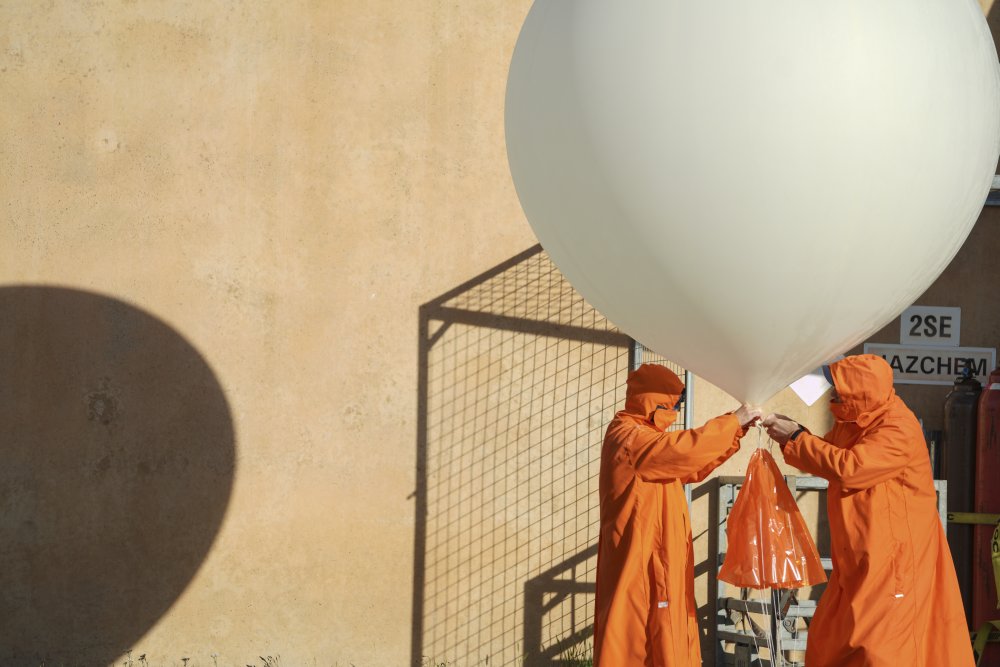
Every week, balloons are launched carrying chemical ‘in-situ’ sensors to altitudes of around 35 kilometres before descending back to the ground. These are complemented by a ground-based LIDAR (Light Detection And Ranging) instrument, which works like RADAR, but instead of using radio waves, it emits beams of pulsed laser light vertically to altitudes of around 100 kilometres. A small fraction of the light is backscattered by air, and is collected by a telescope. The concentrations of ozone (and also aerosols) can be deduced as functions of altitude from the tiny time-delay between sending the output beam and receiving the scattered beam. We also take measurements of greenhouse gases and solar radiation to international standards at Lauder.
Contributions to international literature
Our scientists at Lauder publish their results widely in scientific literature, conference presentations, web pages, public lectures, and press releases. They are also actively involved in international assessments of ozone depletion, its environmental impacts, and climate change.
Network for the Detection of Atmospheric Composition Change
Lauder is one of five global charter sites in the international Network for the Detection of Atmospheric Composition Change (NDACC). Consequently, it has some of the best instruments in the world for atmospheric research. Several of the state-of-the-art instruments are operated in collaboration with overseas partners.
Read about the Network for the Detection of Atmospheric Composition Change (NDACC)
The measurements we provide to the NDACC help the international atmospheric research community to:
- monitor long-term changes in atmospheric composition and radiation
- validate and calibrate satellite sensors in this data-sparse region of the globe
- better understand the causes and effects of ozone depletion
- learn more about the causes and effects of climate change, and interactions between global warming and ozone depletion.
Links
- UV and ozone resources
- Instrumentation at NIWA Lauder
- Research at Lauder [PDF 4MB]
- In 2021, Dr Richard McKenzie (Earth Sciences NZ Emeritus Researcher – Atmospheric Radiation) wrote an article summarising Lauder's work in relation to ozone science: Lauder and its part in the ozone success story [pp 16-21 of SPARC newsletter № 56.]