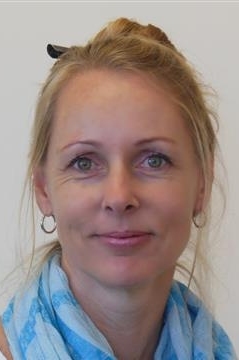
Richard Williams
General Manager Mission - Land and Water
Richard is passionate about leading impactful science that enables sustainable development and use of our planet’s land and water environments. He has developed science strategy and led large, international, multi-disciplinary projects. Richard has led research that has evaluated river restoration, used big data to quantify river morphodynamics, assessed the impact of mining on water quality, and simulated natural flood management approaches in river, estuarine and coastal settings. Until June 2025, Richard was Professor of River Science and Director of Research at the School of Geographical and Earth Systems at the University of Glasgow, Scotland.
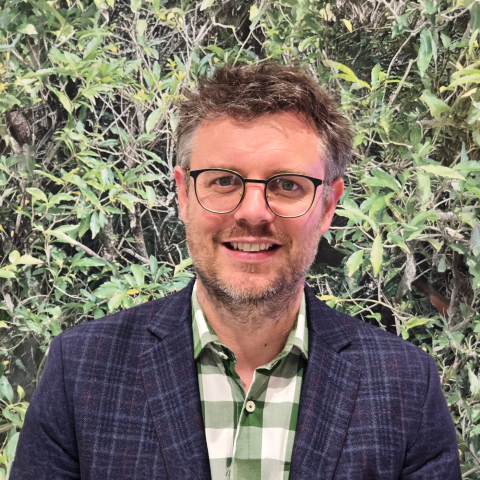
Dr Doug Booker
Hydro-ecological Modeller
Dr Doug Booker is a hydro-ecological modeler at NIWA. He is an expert in development, application and testing of data analytics for improved environmental management. He specialises in advanced data analysis methods such as machine learning and physically-based numerical modelling. Doug has over 20 years of experience researching environment flow requirements, and the interrelationships between flow, geomorphology and ecological values in rivers. He has recently led several large projects on pressure-state-impact modelling of fresh water flows, hydrological indices for national reporting, and indicators for water allocation. He has also conducted research on nationwide hydrological predictions, ecosystem health thresholds for suspended and deposited sediment, river water temperature data, and water quality state and trend analyses. Doug is a member of the NIWA-Meridian Energy Inflow Forecasting Governance Group and has served on the Ministry for the Environment’s Technical Advisory Group for reporting on freshwater. He is the leader of the Environmental Flows Programme, creater of the eFlowsExplorer app and the co-creator the NZrivermaps web app.

Dr Rick Stoffels
Freshwater Ecologist
Rick has over a decade of experience providing science to support the management of freshwater ecosystems in both Australia and New Zealand. He employs a wide array of scientific approaches—from lab experiments to computer modelling—to generate information and tools to inform policy and management decisions at all levels of government. He has specialist expertise in adaptive management and monitoring of freshwater ecosystems; ecological modelling and uncertainty analysis; and the ecology of freshwater animal communities.

Dr Deborah Hofstra
Principal Scientist - Freshwater Ecology
Deborah is a freshwater scientist with a background in plant biology, ecology and genetics. Dr Hofstra specialises in freshwater biosecurity, leading research that focuses on the management of aquatic plants, including the control of invasive species and the restoration of native plants. Her research has been instrumental in providing new control methods for invasive weeds through the use of biodegradable benthic barriers, aquatic herbicides and the assessment of biological control tools. She provides advice to management agencies to support their biosecurity goals, including a strategic approach to invasive species management, and the design and implementation of weed eradication or control plans that support native biota. Deborah has a special interest in the conservation of native flora and fauna which can be better protected through understanding the consequences of aquatic weed invasions and management actions.
Dr Hofstra served as a Director on the Board of the Aquatic Plant Management Society, and is on the Science Committee of the International Aquatic Plants Group.