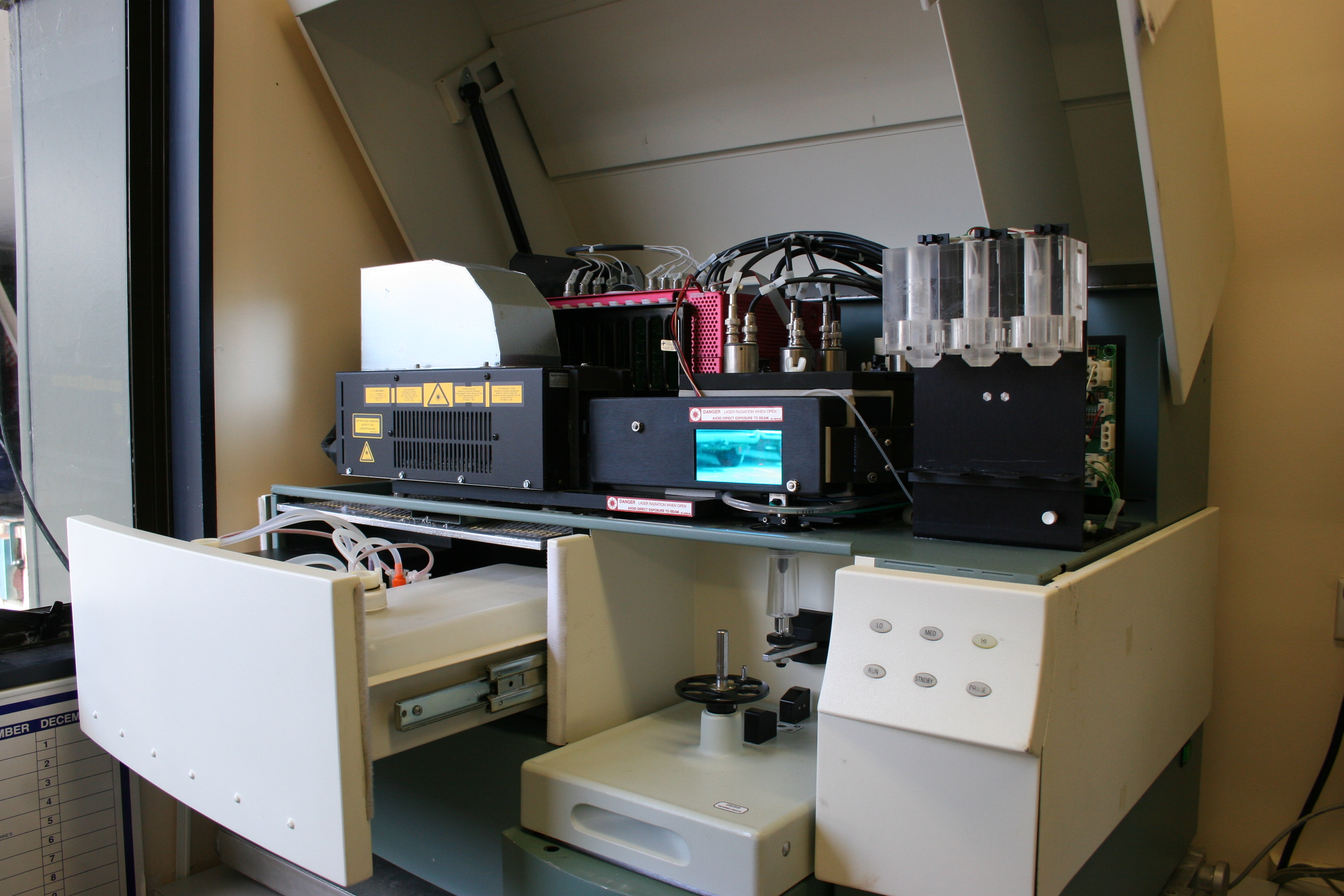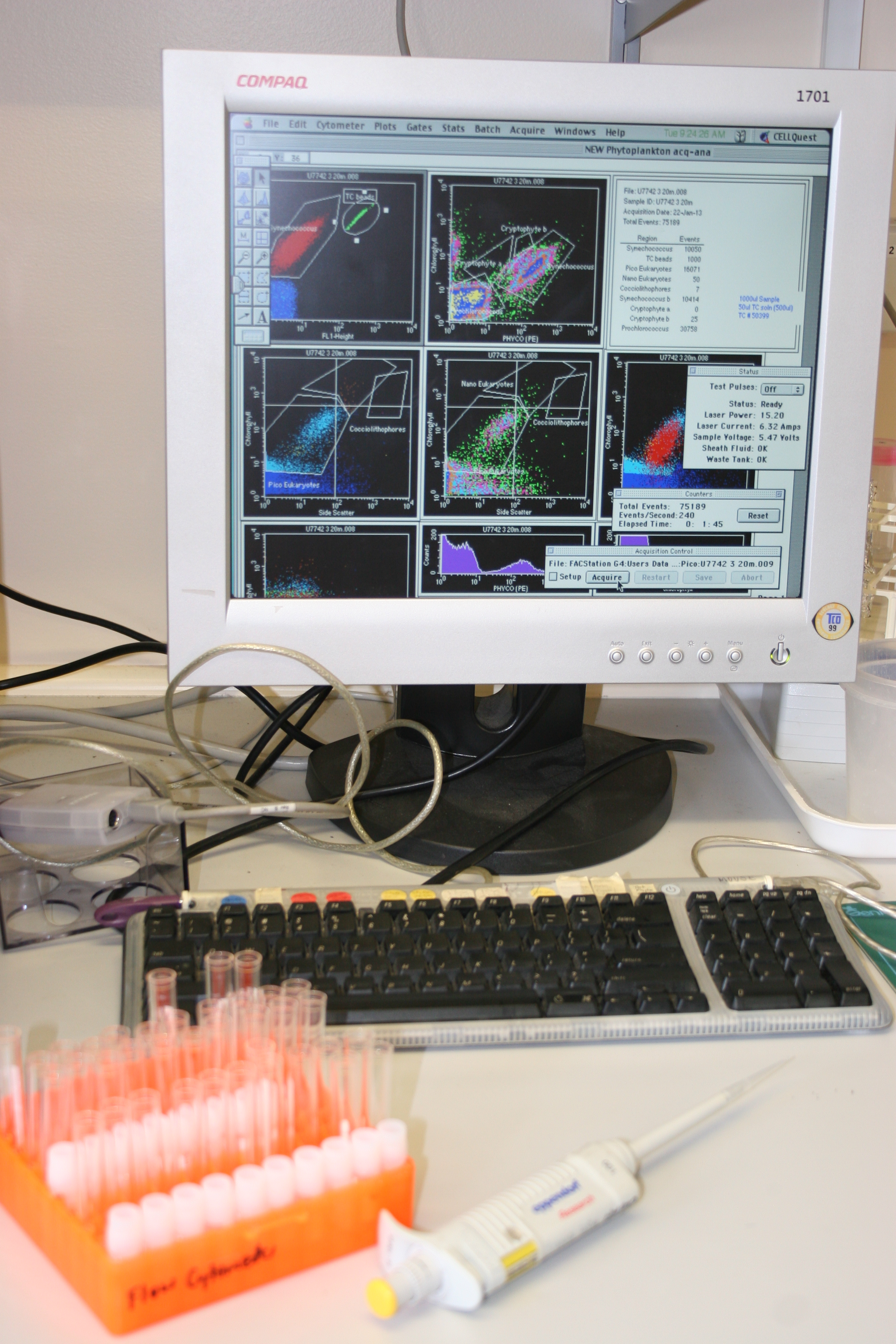
NIWA's Becton Dickinson FACSCalibur flow cytometer supports a wide range of research and commercial applications.
It is housed in the Microbiology Laboratory at NIWA, Hamilton, and is one of a few being used for environmental research in New Zealand. The instrument has a 488-nm laser, which is used to excite naturally fluorescing phytoplankton pigments and a range of fluorescent stains for quantifying cellular function and DNA content of cells or nuclei. The instrument collects data on the size and complexity of the particle and the fluorescent characteristics of the particle at a rate of up to 1300 particles per second. The data are collected, and analysed using software package CellQuestand WinMDI. The FACSCalibur can also sort an identified population from the other material in the sample. This lets us confirm the identity of populations using microscopy and also isolate a population for further experimental work.
The instrument is being used for a wide range of applications, including:
- enumeration of bacteria populations, including the differentiation of active and inactive cells and high and low nucleic acid content populations
- characterising and enumerating phytoplankton populations, particularly the very small picophytoplankton (<2-um cells) including cells which can not be detected using microscope techniques
- evaluating the grazing rates of zooplankton populations on bacterial and phytoplankton populations
- quantifying the food preferences of shellfish and the impacts of suspended sediment on shellfish feeding rates
- quantifying the DNA content of potentially toxic phytoplankton species
- evaluating the nutrient status of phytoplankton in lakes
- quantifying the response of phytoplankton cells to toxic effluents and chemicals.
The FACSCalibur is fitted with a loader which enables the automatic loading and running of up to 40 samples at a time. The instrument regularly goes to sea on board RV Tangaroa, where it is used to characterise and quantify bacterial and phytoplankton populations and the impact of microzooplankton grazing on these populations.