
Stormwater refers to the runoff of water from urban surfaces generated by rainfall or melting snow. It is a major concern for New Zealand because of its potential effects on the ecological health of our urban streams and coastal waters, as well as on the economic, social and cultural value of these environments.
Urbanisation leads to increased stormwater volumes and peak flows as vegetation is removed and soils are compacted or covered by impervious surfaces such as roofing, asphalt and concrete, which do not absorb water. This water is conveyed quickly and efficiently via underground pipe networks to streams, rivers and coastal waters.
Human activities, particularly industry and traffic, lead to the build-up of sediments and contaminants which are eventually washed off during rains, and conveyed via stormwater networks to receiving environments.
Urban stormwater quality is closely linked to both the quantity and quality of urban sediments. These sediments can accumulate, particularly in estuaries and harbours, affecting the ecological health of these water bodies.
The impacts of urbanisation include:
- increased stream bank erosion and sediment transport
- increased deposition of sediments (and associated contaminants) in estuaries and harbours
- increased local flood risk for urban flood plains
- increased overflow frequency and volumes from sanitary sewers, particularly in areas with combined stormwater and wastewater sewers
- contamination of receiving environments, either acute (following storm events), chronic (due to accumulation over time), or both
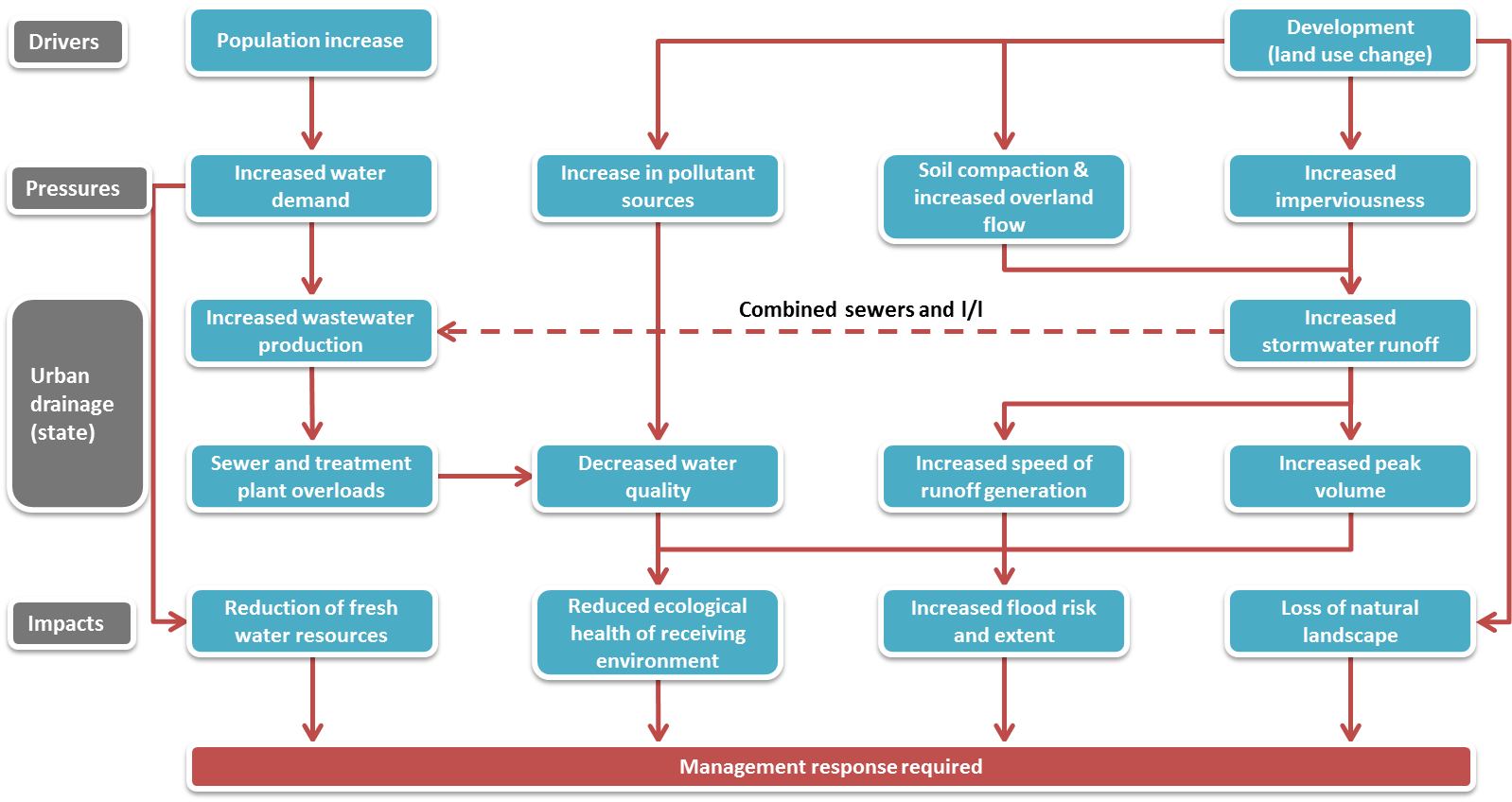
The diagram below shows how urbanisation impacts on urban receiving environments using the DPSIR (Drivers, Pressures, State, Impacts and Responses) framework for reporting environmental issues.
A brief history of stormwater
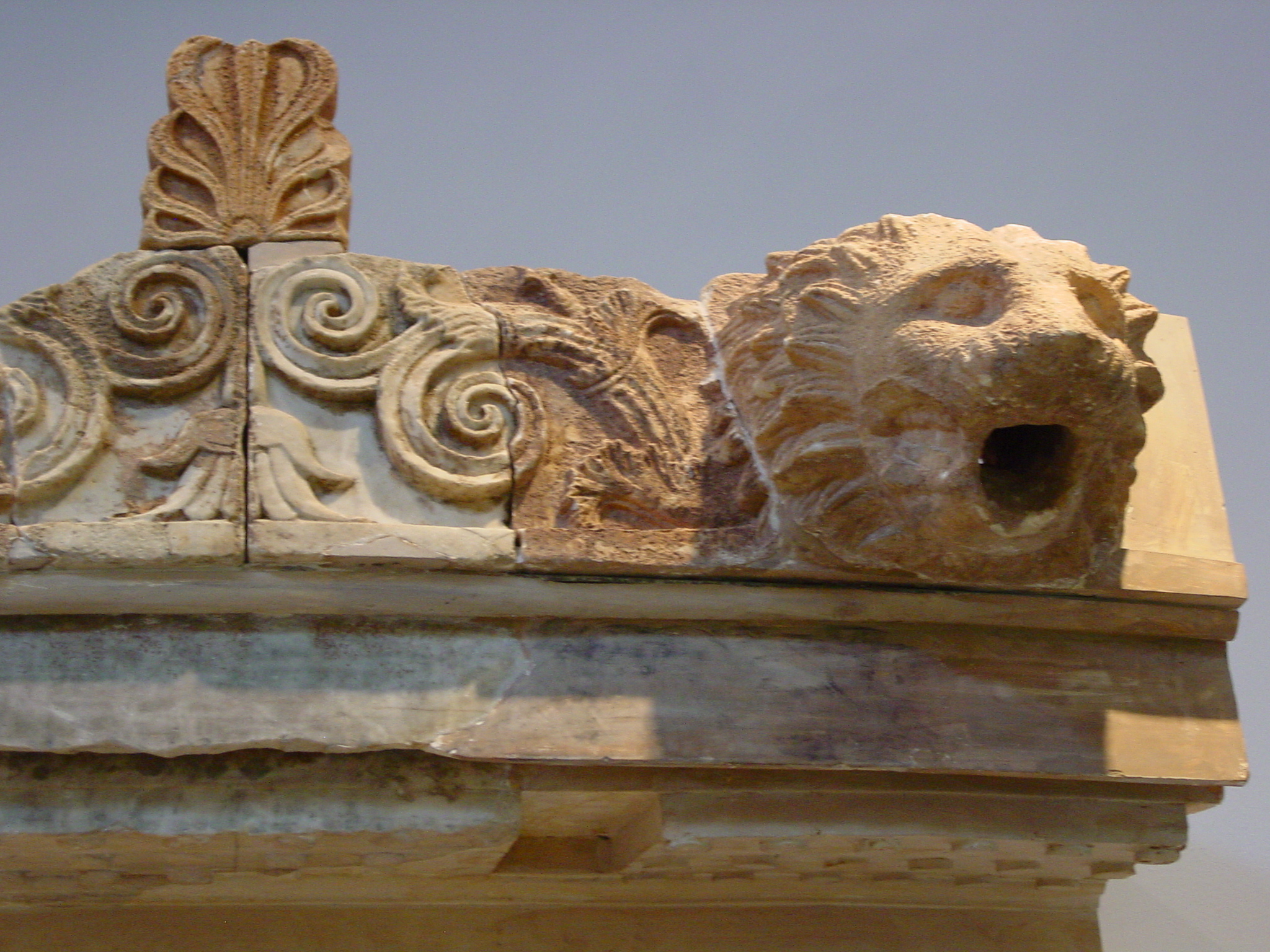
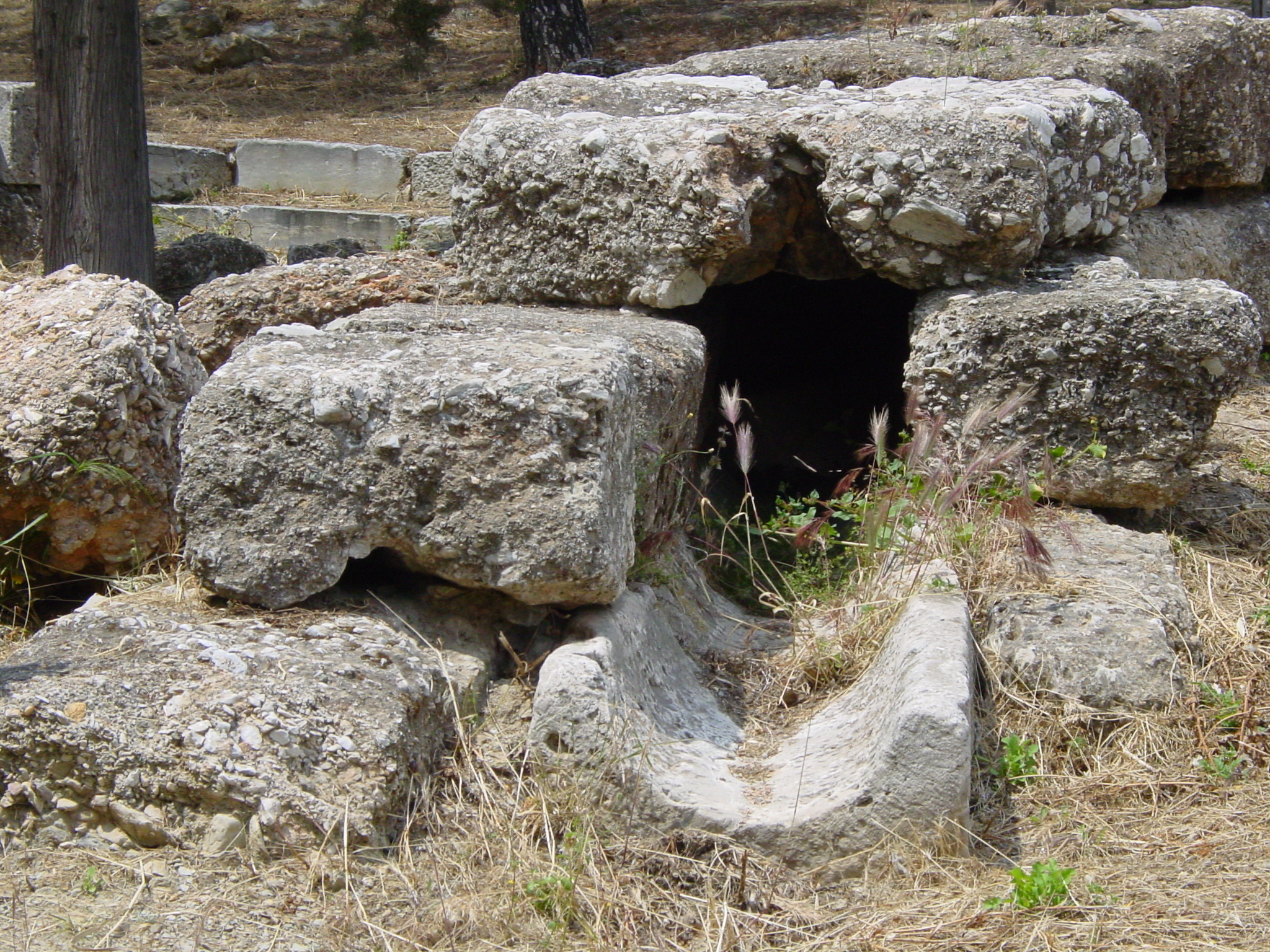
Stormwater management has been around for many years. A number of ancient drains, such as the Cloaca maxima in Rome which was built around 600 BCE, still exist today. The pictures below show an ancient Greek roof-top spout from the Delphi archaeological site and a drain from Athens.
For most of the history of urban drainage, stormwater and waste water have been managed together and have been jointly considered a hazard to be removed from urban centres as quickly as possible to reduce flood risk and protect the urban populace from water borne diseases. Underground stormwater pipe networks common to most cities in Europe and North America were constructed in the mid-19th century following rapid urbanisation due to the industrial revolution. Australia and New Zealand followed suit, and sewers were built as the cities grew.
The first sewers were covered urban streams, which were later buried and lined with pipes or brickwork. The Waihorotiu Stream in Auckland typifies this phase of urban development. The stream originally flowed from a gully (now Myers Park) down the length of Queen Street; it was turned into a channel and called the Ligar Canal, then later replaced by the buried pipes Auckland uses to this day.
Many of these "combined sewers" are still with us, particularly in city centres. Water carried in combined sewers was originally conveyed directly to receiving waters but is now usually led to waste water treatment plants, where it is treated before release. Combined sewers are designed to overflow during heavy rainfall and can therefore constitute a danger to receiving environments and human health. This is the reason that beaches are often closed for swimming or shellfish collection following stormy weather.
From the 1950s, separate pipe networks for waste water and stormwater have become standard in New Zealand and there are ongoing programmes around the country to separate combined sewers. Even so, streams have continued to be turned into channels or replaced with hydraulically-efficient buried pipes.
Over the last decade or so, the realisation that urban water bodies are at risk from both flooding and poor water quality has led to a shift in stormwater management towards systems that reduce and attenuate flows and treat stormwater contaminants, as opposed to those designed principally for drainage. These management systems are variously called low impact design (LID), water sensitive urban design (WSUD), sustainable urban drainage systems (SUDS) and best management practices (BMPs).
Common examples of stormwater treatment devices used in LID include:
- detention ponds and wetlands
- infiltration surfaces
- permeable paving
- swales (vegetated ditches)
- media filters
- bio-retention
- green-roofs
Many of these devices are visually appealing and can be incorporated into landscaping to provide a blue-green space in the otherwise concrete and asphalt urban environment. Stormwater has truly become a liquid asset.
At present, LID is mainly applied in greenfield developments, but there are moves to design ways to retrofit existing stormwater systems. There are also moves to restore urban waterways to their natural state to improve both water quality and the aesthetics of the urban landscape. NIWA scientists from Christchurch and Hamilton have been involved in urban stream restoration projects.
NIWA and stormwater
Much of the NIWA's urban aquatics work involves urban hydrological monitoring (both stormwater and streams), characterising stormwater quality and assessing the performance of stormwater treatment devices, and modelling for stormwater management. We also work with other NIWA groups to assess the impacts of urbanisation including stream erosion, flooding and ecosystem degradation.
Our stormwater management pages contain examples of our work.