NIWA and the Te Arawa Lakes Trust, with support from the New Zealand Foundation for Research Science and Technology and the Health Research Council, have developed a sustainable management framework for customary fisheries in Te Arawa lakes, as part of a joint 3 year research programme.
The problem
The ability of Te Arawa iwi to fully appreciate the impact of declines in water quality and other lake changes and their effect on traditional uses of the Rotorua lakes, such as mahinga kai harvests, has been limited by a lack of investigative and relevant tools. In particular, Te Arawa has not been in a position to identify key drivers of the distribution and abundance of these important taonga species.
The solution
NIWA and the Te Arawa Lakes Trust, with support from the New Zealand Foundation for Research Science and Technology and the Health Research Council, have developed a sustainable management framework for customary fisheries in Te Arawa lakes, as part of a joint 3 year research programme.
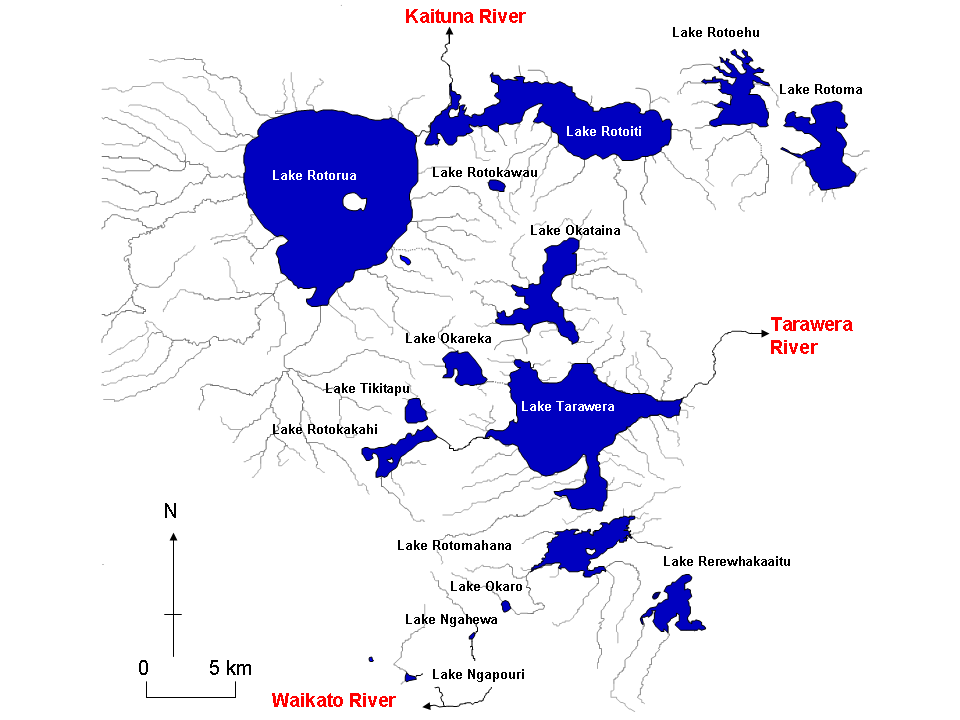
The Te Arawa lakes include lakes Rotoehu, Rotomā, Rotoiti, Rotorua, Ōkataina, Ōkareka, Rerewhakaaitu, Tarawera, Rotomāhana, Tikitapu, Ngahewa, Ōkaro, Ngāpouri and Tutaeinanga.
As part of this programme we have developed tools, monitoring methods and guidelines based on customary knowledge and sound scientific principles that focus specifically on culturally important mahinga kai and taonga species. We have provided Te Arawa with the capacity to manage their lakes non-commercial fisheries sustainably and in a manner that is consistent with their tikanga and kawa.
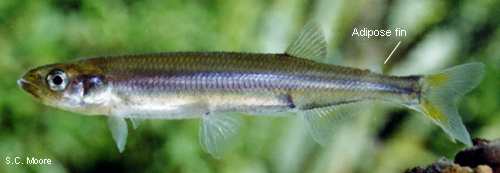
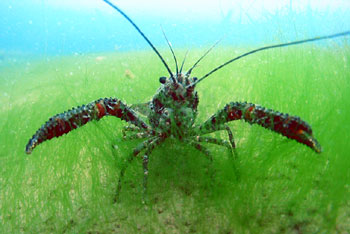
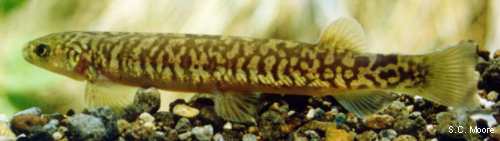
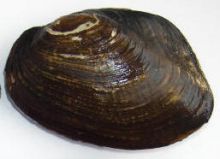
The focus of the project is on freshwater crayfish, mussel and fish species, including kōura (Paranephrops planifrons), kākahi (Hyridella menziesi), kōaro (Galaxias brevipinnis), common smelt (Retropinna retropinna) and tuna (Anguilla australis and A. dieffenbachii).
The results
There were three main components to this research programme:
(1) Characterisation of taonga and mahinga kai species of the lakes (in terms of both cultural and scientific values)
We documented cultural and scientific knowledge on five taonga/mahinga kai species from Te Arawa lakes using scientific and kaupapa Māori methodologies. An overview report of the project and a general description of the aquatic fauna of the Te Arawa lakes is available.
Taonga and mahinga kai species of the Te Arawa lakes: a review of current knowledge - Overview (PDF 215 KB)
Reports on current knowledge are available for koura, kakahi, koaro, smelt and tuna.
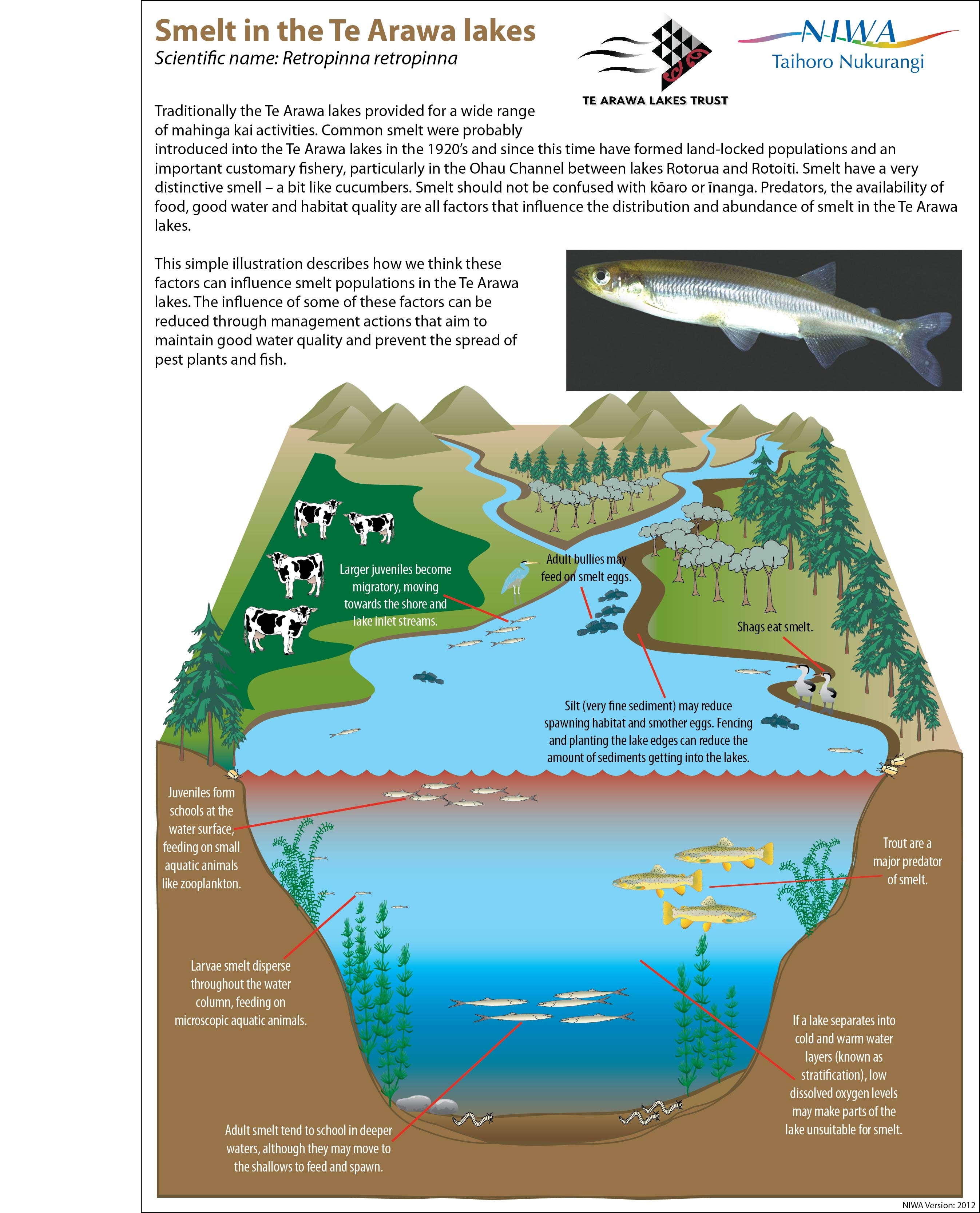
Visual summary sheets have been developed for koura, kakahi, koaro and smelt.
- Koura in the Te Arawa lakes (JPG 2.4 MB)
- Kakahi in the Te Arawa lakes (JPG 2.3 MB)
- Koaro in the Te Arawa lakes (JPG 2.7 MB)
- Smelt in the Te Arawa lakes (JPG 2.3 MB)
Guide for assessing the health of kakahi (PDF 1.6 MB)
(2) Assessment of the likelihood of changes to these resources in the face of anthropogenically-induced environmental variability
We have used this knowledge to develop conceptual models that describe how various physical (e.g., water quality) and biological (e.g., predation) variables control the distribution and abundance of the five taonga/mahinga kai species in the Te Arawa lakes. These models have been developed using existing information.
More information about the conceptual models
(3) Identification of potential management options that fit into a regional management framework for the lakes.
Using the conceptual models as a basis, we have developed a Knowledge Network Model which describes the relationships between water quality and habitat variables for koura. We have used a novel modelling approach (Bayesian Belief Network or BBN) to achieve this. This model will be utilised by Te Arawa to identify strategic management actions for sustainable management defined under the Te Arawa Lakes (Fisheries) Regulations (2006).
More information about the Knowledge Network Model
These models will aid Te Arawa, a member of the Lakes Strategy Group, in testing possible scenarios associated with changes in, for example, water quality or predator numbers. This model could also be used to determine appropriate management actions for enhancing or restoring kōura to specific lakes and will support Te Arawa's role as kaitiaki of the Te Arawa lakes.
In addition, a report examining the potential restoration options for declining koaro populations has been prepared.
Status of koaro (Galaxias brevipinnis) populations in the Te Arawa lakes and options for their restoration [PDF 13.8MB]
Acknowledgements
We are grateful for the contributions from the following people: Roku Mihinui, Hera Smith and Willy Emery, Te Arawa Lakes Trust; Bella Tait, Rotorua District Council; David Hamilton and Joseph Butterworth, University of Waikato; John Clayton, Tracey Edwards, Max Gibbs, Kristel van Houte-Howes, Clive Howard-Williams, Weno Iti, Charlotte Severne, Apanui Skipper, Thomas Wilding and Erica Williams, NIWA.
This project has been funded by FRST/HRC Māori Development under contract C01X0512 “Sustainable Management Framework for Te Arawa Lakes Customary Fishing”.
External people involved:
Stephanie Parkyn
Roku Mihinui
Hera Smith
Ian Kusabs
Willie Emery
Dr Ngaire Phillips